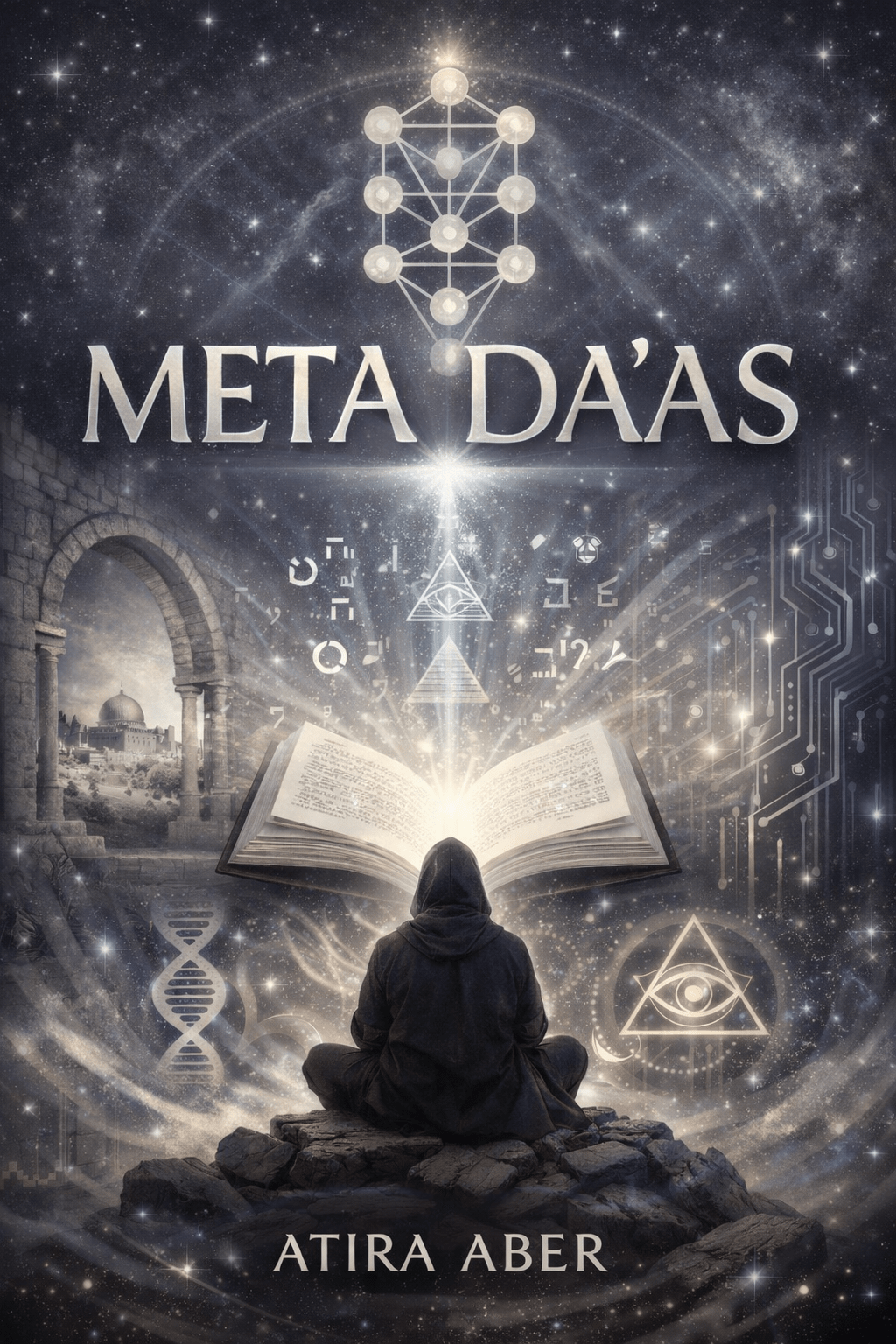
This book is not a manifesto, not a memoir, and not theology—though it borrows the grammar of all three. It is a record of what happens after awakening, when insight does not save you, does not make you good, and does not make the world coherent.
The book begins with fracture. Awakening is introduced not as enlightenment but as destabilization: the moment consciousness turns inward and realizes it is trapped inside a body, a culture, a history, and a nervous system shaped by forces it did not choose. Exile (galut) is reframed as psychological rather than geographic—the condition of being ruled by impulse, inheritance, and unconscious pattern. Redemption (geulah) is not escape, transcendence, or purity, but the far harder task of conscious inhabitation.
Using cultural texts—most centrally The Matrix—the book introduces the idea of the purple pill: perception without collapse. Not denial (blue), not revolutionary fantasy (red), but awareness that sees the system clearly while continuing to live inside it. Awakening here is not freedom. It is responsibility without payoff.
As the book progresses, it moves from sensation to structure. Pattern recognition—Binah—is revealed as a terror rather than a comfort. The universe begins to resolve into numbers, spirals, repetitions, and inherited scripts. God appears not as a benevolent parent but as a nonbinary condition: existing and not existing simultaneously, legible as structure but silent on mercy. Intelligence, the book argues, does not automatically produce ethics. Seeing the pattern does not make you kind.
From here, the book becomes increasingly dangerous. Meta-awareness turns violent when detached from compassion. The fourth wall breaks. Narratives are exposed as tools of control. Religion is examined not as faith but as a misread operating system—sometimes a survival technology, sometimes a weapon. Trauma is shown to replicate itself not only biologically but symbolically, across families, nations, and languages.
The later sections confront permanence. What does it mean to live permanently out of phase with consensus reality? What happens when you cannot unknow what you know, but knowledge does not redeem you? The book rejects apocalypse, utopia, and messianic fantasy. Instead, it insists on daily spiritual labor: choosing restraint over purity, care over coherence, responsibility over rescue.
The epilogue returns to Eden—but not as nostalgia. Both trees are touched: the Tree of Knowledge and the Tree of Life. Immortality is achieved, not as reward, but as burden. The final question is not How do we escape? but How do we live, knowing everything continues?
This is a book about awakening after the glamour is gone. About consciousness without consolation. About choosing to remain human when transcendence is no longer believable—and no longer necessary.


Leave a Reply