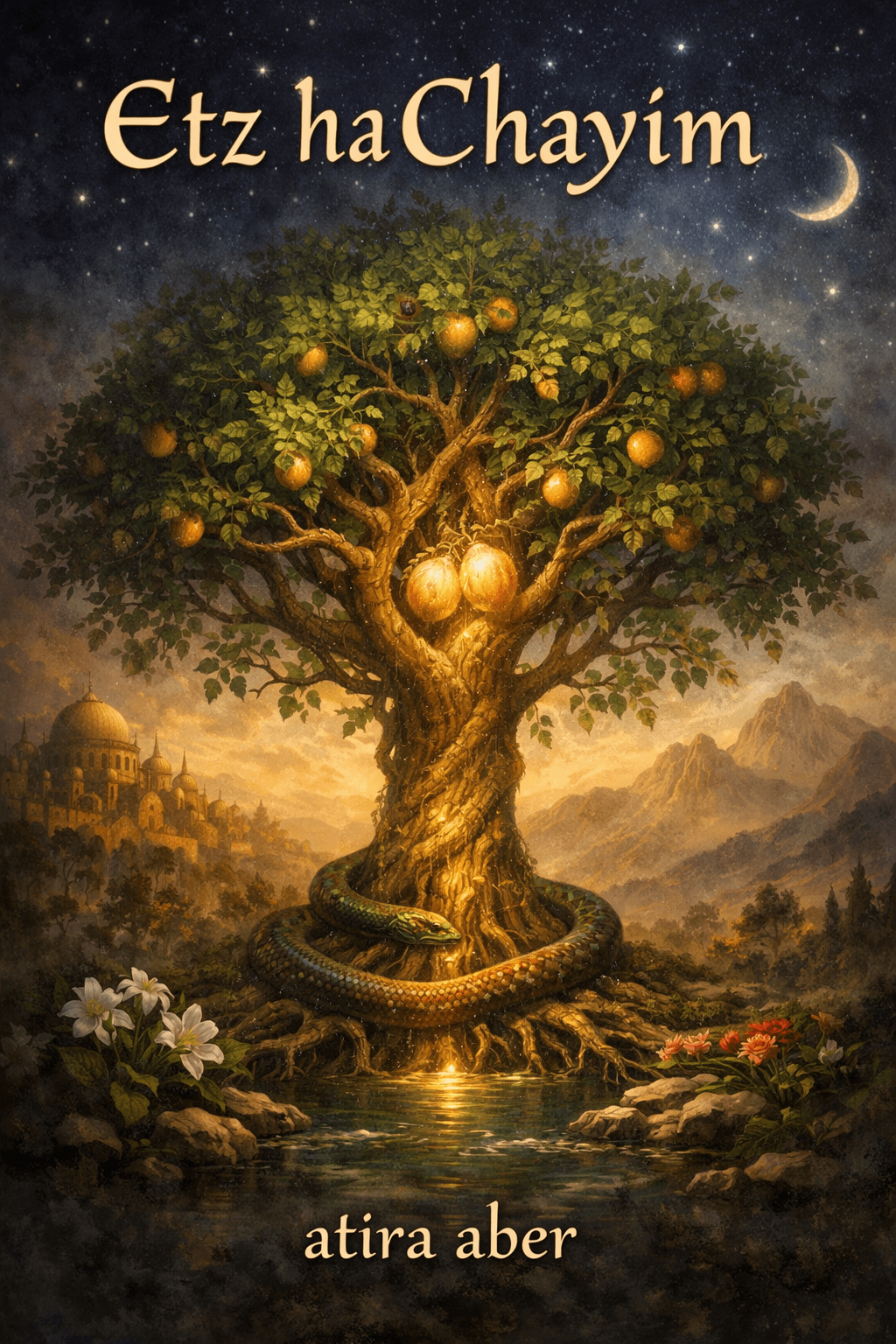
Synopsis
Etz haChayim is a post-scriptural work about what it means to live after knowledge—after good and evil are known, after God has been named, after systems, identities, and certainties have failed to save us.
Moving through Judaism, Christianity, Islam, Eastern traditions, and modern cult psychology, the book listens to many voices—Moses, Mary, Jesus, Muhammad, Aisha, the Buddha, the Tao, indigenous elders, even Satan and God—not to establish doctrine, but to test how meaning behaves when it meets power, fear, trauma, and responsibility.
Its central claim is simple and demanding:
knowing is not the same as living.
The book argues that most spiritual harm comes not from disbelief, but from urgency, purity, identity, total explanation, and coercion—tricks that turn devotion into control and insight into violence. Against this, it offers restraint, consent, sanity, humor, embodiment, and care as the true measures of faith.
The final movement returns the reader to the wisdom of The Little Prince:
that responsibility grows from relationship, not domination;
that what matters most cannot be owned or optimized;
and that choosing life is not a one-time decision, but a daily practice.
This is not a book that tells you what to believe.
It is a book that asks whether, knowing what you now know, you will still choose to tend what is alive—without fear, without coercion, and without mistaking certainty for truth.
 Bnei Adam
Leave a comment